

A Day in the Life of an American Stay-at-Home Mom
This story follows Sarah, a suburban stay-at-home mom, navigating chaotic daily family routines. With Kinmory’s AI calendar, reclaims precious personal time.
A Day in the Life of an American Stay-at-Home Mom — And How AI Finally Gave Her Time Back
Meet Sarah, 39, mom of two — Ethan (8) and Lily (6) — living in the suburbs of Austin, Texas.
6:45 AM — The Morning Negotiation
Sarah's alarm goes off at 6:45. Her husband Jake left for the office at 6:30. That means the next 90 minutes are entirely on her.
She used to start each morning by mentally running through the day: Does Ethan have soccer practice today or Thursday? Is Lily's field trip permission slip due today or tomorrow? Did I put the dentist appointment in the family calendar or just my phone?
Most days, at least one thing slipped.
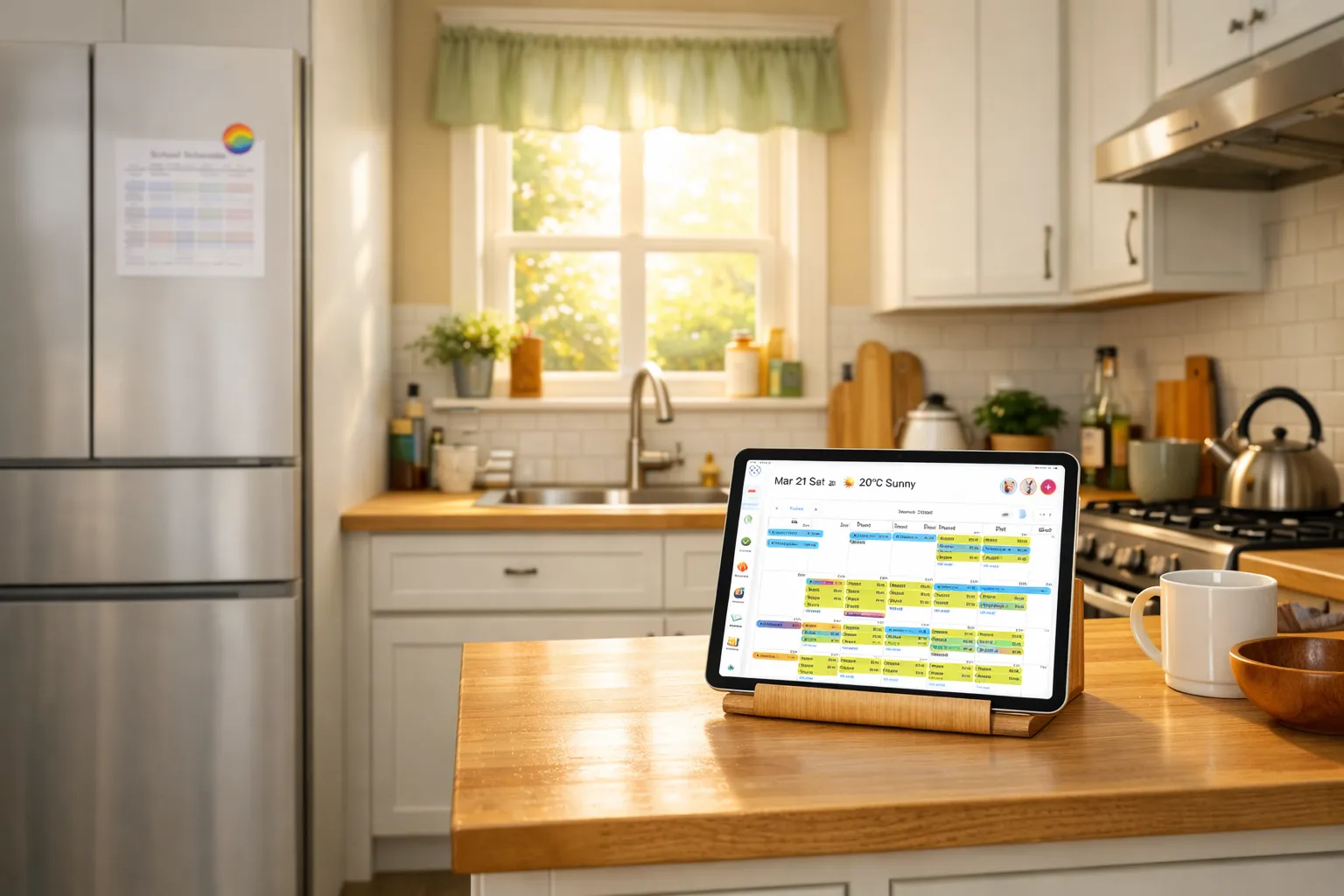
Now, before she even gets out of bed, she glances at the Kinmory screen on the old iPad mounted in the kitchen — the one that used to collect dust in a drawer. The day's schedule is already there: Ethan's practice is Thursday, Lily's permission slip was submitted yesterday, and the dentist is Friday at 3PM. Jake confirmed he'll do pickup.
She didn't have to text Jake. She didn't have to check three different apps. It was just... there.
7:00 AM — The Art of the Gentle Wake-Up
Two kids. Two very different morning personalities.
Ethan will sleep through anything. Lily wakes up ready to debate the fairness of the universe before breakfast.
Sarah learned — the hard way — that yelling "get up, we're late!" ruins the entire morning for everyone. A grumpy kid at 7AM becomes a slow kid at 7:30, which becomes a frantic drop-off at 8:05.
Now she walks in quietly, sits on the edge of each bed, and gives them a minute.
"Good morning, buddy. Big day today."
It takes an extra five minutes. It saves thirty.
7:15 AM — Breakfast on Autopilot
Sarah stopped trying to be creative at breakfast years ago.
The menu rotates between three options: scrambled eggs and toast, oatmeal with fruit, or cereal if it's been a rough morning. The kids know the options. They pick. Done.
What used to derail breakfast was the parallel mental load: Did I buy more orange juice? Ethan needs his inhaler in his backpack. Is today a school lunch day or did I pack something?
She started putting these micro-tasks into Kinmory using voice input while she cooks.
"Hey Kinmory, add 'pack Ethan's inhaler' to this morning's checklist."
It shows up on the kitchen screen immediately. Jake sees it too, from his phone, if he happens to be working from home.
The small things stopped falling through the cracks.
8:10 AM — The Send-Off
Before they walk out the door, Sarah has one rule: end on something positive.
"Have the best day. Tell me one thing that happened when you get home."
It's a small ritual. But Ethan and Lily almost always come home with something to say — a funny thing at recess, a test they aced, a fight they made up. The conversation was already opened in the morning.

9:00 AM — The Hours That Are Actually Hers
With the kids at school, Sarah has roughly five hours before pickup.
She used to freelance in marketing before she stepped back when Jake's company relocated them from Chicago to Austin four years ago. Two cities, two kids in new schools, a husband traveling every other week — something had to give. It was her career.
For two years, she told herself she'd "figure it out later."
Later eventually came.
She started doing part-time brand consulting from home last year — just a few clients, flexible hours, nothing that required her to be at 9AM sharp. But even with that freedom, the mental load of running a household while trying to do real work was relentless.
The invisible work — the school calendar, the grocery list, the "did Jake pick up the dry cleaning" — has no off switch.
What shifted for Sarah wasn't a productivity system or a new planner. It was that she and Jake finally started managing the family in the same place.
Kinmory became the shared brain they never had.
Jake adds things from his phone. The kids have their own chore lists on their tablets. When something changes — a schedule shifts, a task gets done — everyone sees it.
She stopped being the family's sole information hub.
"I used to spend 20 minutes a day just updating Jake on what was happening with the kids," she says. "Now he just... knows. He checks the app. It sounds small. It's not small."
2:45 PM — The Second Shift Begins
Pickup is at 3. Which means 2:45 is when Sarah saves her work, closes her laptop, and transitions back.
The afternoon is its own kind of logistics puzzle: snacks, homework, activities, dinner, baths, bedtime. Compressed into about four hours.
The thing she used to dread most was the daily question: "What's for dinner?"
Not because cooking is hard. Because deciding is hard, especially at 3PM when she's mentally depleted.
Now she batches the decision on Sunday. The week's dinners are in Kinmory. She sees what she needs to defrost by 10AM. Jake knows if he's on pickup, she's on dinner — and vice versa — without a single text.
8:30 PM — After They're Asleep
The house goes quiet.
For a long time, this was Sarah's "catch-up" time — the hour she'd spend re-doing the mental inventory of everything undone.
Now it's mostly hers.
She makes tea. She reads. Sometimes she and Jake actually talk — not about logistics, not about who's taking Lily to gymnastics on Saturday, but actually talk.
"We used to spend most of our evening conversations just syncing calendars," she laughs. "Now that part just... happens. We talk about other things."
What Actually Changed
Sarah isn't the same person she was two years ago — more organized, less reactive, clearer about what she wants her days to look like.
But the shift didn't come from working harder or waking up earlier. It came from finally having a system where the family's information lived in one place that everyone could see and contribute to — not just in her head.
She still forgets things sometimes. Jake still occasionally misses a task. The kids still resist bedtime.
But the baseline chaos is lower. And in a house with two kids, two schedules, and one very finite amount of daily energy — lower baseline chaos is everything.
Kinmory is a free AI-native family calendar and task app that works on any device — including that old tablet you're not using. No new hardware needed.
Related reading
- Why Traditional Calendars Fail ADHD Brains
Kinmory is like an AI-powered boost for ADHD, delivering always-on assistance throughout daily life. Kinmory’s AI input, visible wall calendar fit ADHD brains naturally.
- My AI Chief of Staff: How Kinmory Saved This Working Mom From Chaos
Busy working moms juggle schedules, chores, and deadlines, often leading to burnout. Kinmory is an AI family organizer that automates emails, shared calendars, and tasks.
- DIY Smart Family Calendar Screen for Under $120 — Cheaper Than Any Store-Bought Display
Dedicated smart calendar screens cost $200 to $400. This DIY build — a Raspberry Pi, a cheap AliExpress touchscreen, and KinCals — gets you the same result for under $120. With the satisfaction of building it yourself.
- A Family Organization System Should Survive a Busy Week
A resilient family organization system favors quick capture, visible next actions and easy recovery over perfect routines and constant maintenance.
Bring your family's plans into one place.
Use Kinmory on the web or phone to share calendars, tasks, meals and the information your household needs next.

Scan to Download
Point your camera here
kinmory.ai/download/kinmory