

Why Traditional Calendars Fail ADHD Brains
Kinmory is like an AI-powered boost for ADHD, delivering always-on assistance throughout daily life. Kinmory’s AI input, visible wall calendar fit ADHD brains naturally.
Why Traditional Calendars
Fail ADHD Brains
— And What Actually Works
It's not about trying harder, buying a new planner, or setting more alarms. ADHD is a brain-wiring difference. The tools need to change, not you.
Let's start with something important:
ADHD is not a disorder to be fixed. It's a different operating system. Your brain processes the world differently — not worse, just differently. The real problem? Almost every productivity tool ever built was designed for a different OS entirely.
That's where Kinmory comes in. Because Kinmory is AI-native — built from the ground up around how people actually think and talk, not how they're "supposed" to — it works like a cheat code for ADHD brains. Not a workaround. Not a compromise. An actual unfair advantage.
If you've tried every calendar app, every planner, every color-coded system — and it worked for a week before falling apart — this isn't a failure of effort. It's a mismatch between your brain and the tools you were given. That ends here.
First, Let's Name What's Actually Hard
ADHD isn't laziness or a lack of care. It's an executive function disorder — meaning the part of the brain that manages planning, time, memory, and task initiation works differently. Here's what that looks like in real family life:
Working Memory Overload Memory
The brain can't hold multiple things at once. You think of something important, turn around to grab your phone, and it's gone. Not because you don't care — because the working memory buffer is simply smaller.
Time Blindness Time
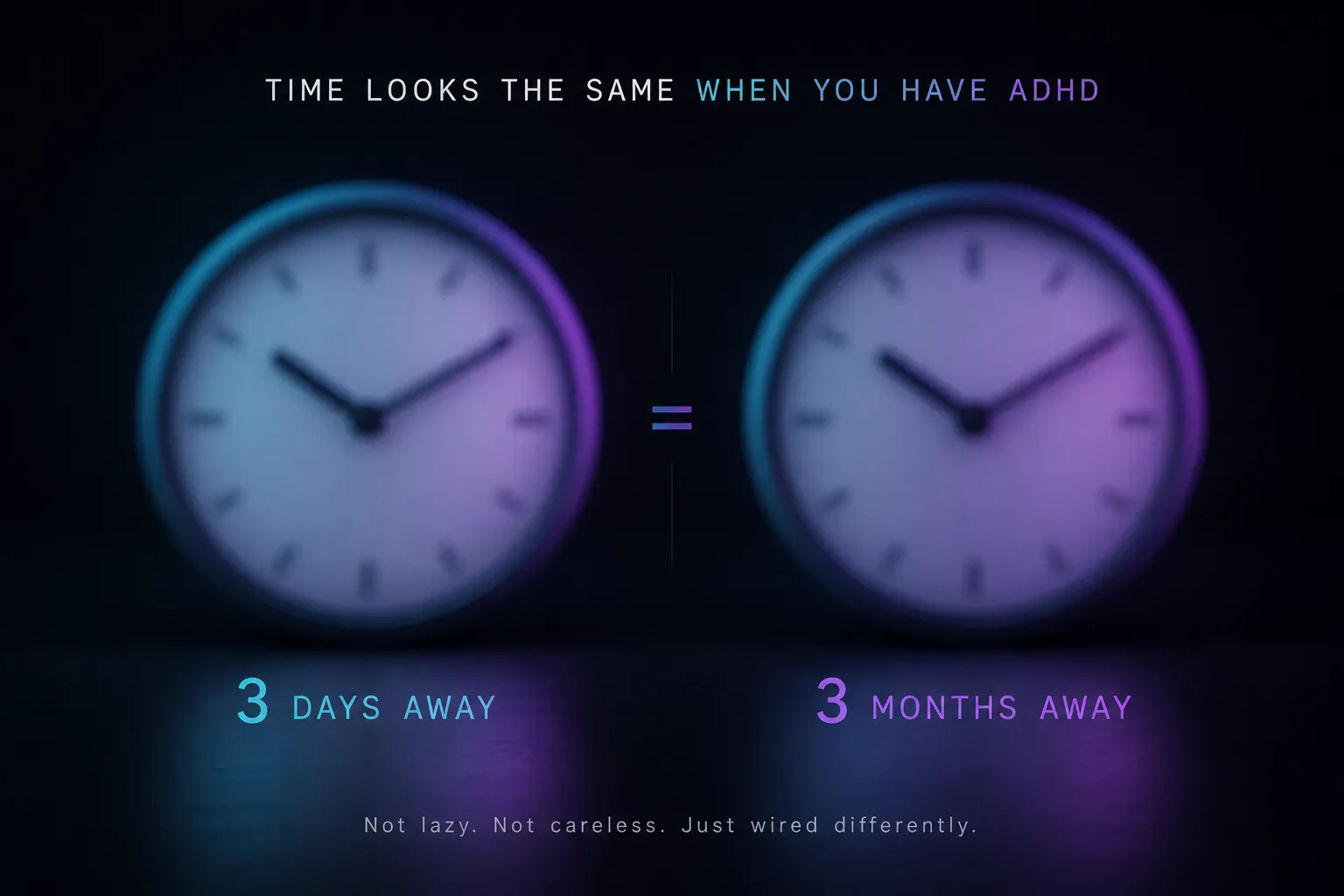
For ADHD brains, time has only two states: Now and Not Now. An event three days away feels the same as one three months away — both are "not now." Until suddenly it's tomorrow and you're scrambling.
Task Initiation Paralysis Focus
Knowing you need to do something and being able to start it are two completely different things for an ADHD brain. Vague, multi-step tasks are especially paralyzing — the brain can't find the entry point.
Hyperfocus Tunnel Vision Focus
When something is interesting, the ADHD brain locks in completely — blocking out everything else. This sounds useful until you realize two hours passed and you forgot to start dinner.
Decision Paralysis Decision
When there are too many options or the stakes feel high, the ADHD brain freezes. This can show up as small as "what should we have for dinner?" becoming a 45-minute stressor.
How Kinmory Works
With the ADHD Brain
Zero-Friction Input = Beat the Working Memory Gap
Less steps between "I thought of it" and "it's recorded"The biggest obstacle for ADHD is the gap between having a thought and capturing it. Traditional apps require: unlock phone → find the app → navigate to the right section → type it out. By then, the thought is gone.
Kinmory's voice input and AI parsing collapse this gap. You say it — it's captured, categorized, and placed on the family calendar. No friction, no steps, no lost thoughts.
For ADHD, this isn't a convenience feature — it's a fundamental requirement. The tools that survive ADHD brains are the ones that meet you exactly where the thought happens.
Visible Calendar = Make Time Real
Physical visibility defeats time blindnessIf it's not in your visual field, it doesn't exist for an ADHD brain. An app notification you swipe away, a calendar you have to deliberately open — these don't work. What works is ambient visibility: information that's just there, always, in physical space.
Kinmory turns an old iPad into a wall-mounted family display. The week's schedule, who's doing what, what's due when — visible on the wall in the kitchen or hallway, without opening anything.
This is actually the most recommended ADHD management strategy by occupational therapists: externalize everything, make it visible, keep it in physical space. Kinmory is that strategy made digital.
AI Task Breakdown = Solve the Paralysis
No more staring at vague tasksThe task "prepare for back to school" will paralyze an ADHD brain indefinitely. It's too vague, too multi-step, too open-ended. There's no clear starting point, so the brain never starts.
When you add a task like this to Kinmory, AI breaks it down automatically: buy backpack → get supplies list from school → fill out registration forms → prep first day lunch → set morning alarm. Suddenly there's a first step. A first step you can actually take.
The hardest part of any task for an ADHD brain is starting. A clear, concrete first action is often all it takes to get moving.
Shared Family System = Heal the Relationship
Less reminding, less guilt, more equityOne of the quietest, most painful parts of ADHD in a family is the dynamic it creates: the ADHD partner forgets things, the other partner picks up the slack and reminds, the ADHD partner feels managed and guilty, resentment builds on both sides.
Kinmory makes the family's information visible to everyone — not just one person's brain. Jake can check the app. The kids have their own chore lists. When something is done, everyone sees it. When something is coming up, everyone knows.
The goal isn't to manage the ADHD partner — it's to take the cognitive load off of any single person. When the system holds the information, no one has to.
"ADHD brains aren't broken. They need different tools — ones that adapt to how they actually work, instead of demanding they work differently."— The Kinmory Philosophy
A Note on ADHD and Family Guilt
Many adults with ADHD carry years of shame about "forgetting important things" — school events missed, appointments forgotten, promises not kept. This shame is compounded when it affects people you love.
It's worth saying directly: the forgetting isn't a character flaw. The brain isn't filing those items correctly, not because they don't matter, but because the filing system works differently. External systems — visible calendars, shared task lists, AI reminders — aren't crutches. They're the accommodation the brain actually needs.
When families use Kinmory together, something often shifts: the ADHD partner stops being the one who forgets, and becomes an equal participant in a shared system. That's not a small thing.
The Right Tool Changes Everything
If you've been blaming yourself for not being "organized enough," for losing track of your family's schedule, for the mental exhaustion of trying to hold everything in your head — please hear this: the problem isn't you.
The problem is a mismatch. Traditional planners were designed for neurotypical brains. They require consistent habit-building, delayed gratification, and a reliable working memory. ADHD brains need something different: zero friction, ambient visibility, smart breakdown, and shared accountability.
That's exactly what Kinmory was built to be.
Related reading
- A Day in the Life of an American Stay-at-Home Mom
This story follows Sarah, a suburban stay-at-home mom, navigating chaotic daily family routines. With Kinmory’s AI calendar, reclaims precious personal time.
- My AI Chief of Staff: How Kinmory Saved This Working Mom From Chaos
Busy working moms juggle schedules, chores, and deadlines, often leading to burnout. Kinmory is an AI family organizer that automates emails, shared calendars, and tasks.
- DIY Smart Family Calendar Screen for Under $120 — Cheaper Than Any Store-Bought Display
Dedicated smart calendar screens cost $200 to $400. This DIY build — a Raspberry Pi, a cheap AliExpress touchscreen, and KinCals — gets you the same result for under $120. With the satisfaction of building it yourself.
- A Family Organization System Should Survive a Busy Week
A resilient family organization system favors quick capture, visible next actions and easy recovery over perfect routines and constant maintenance.
Bring your family's plans into one place.
Use Kinmory on the web or phone to share calendars, tasks, meals and the information your household needs next.

Scan to Download
Point your camera here
kinmory.ai/download/kinmory