
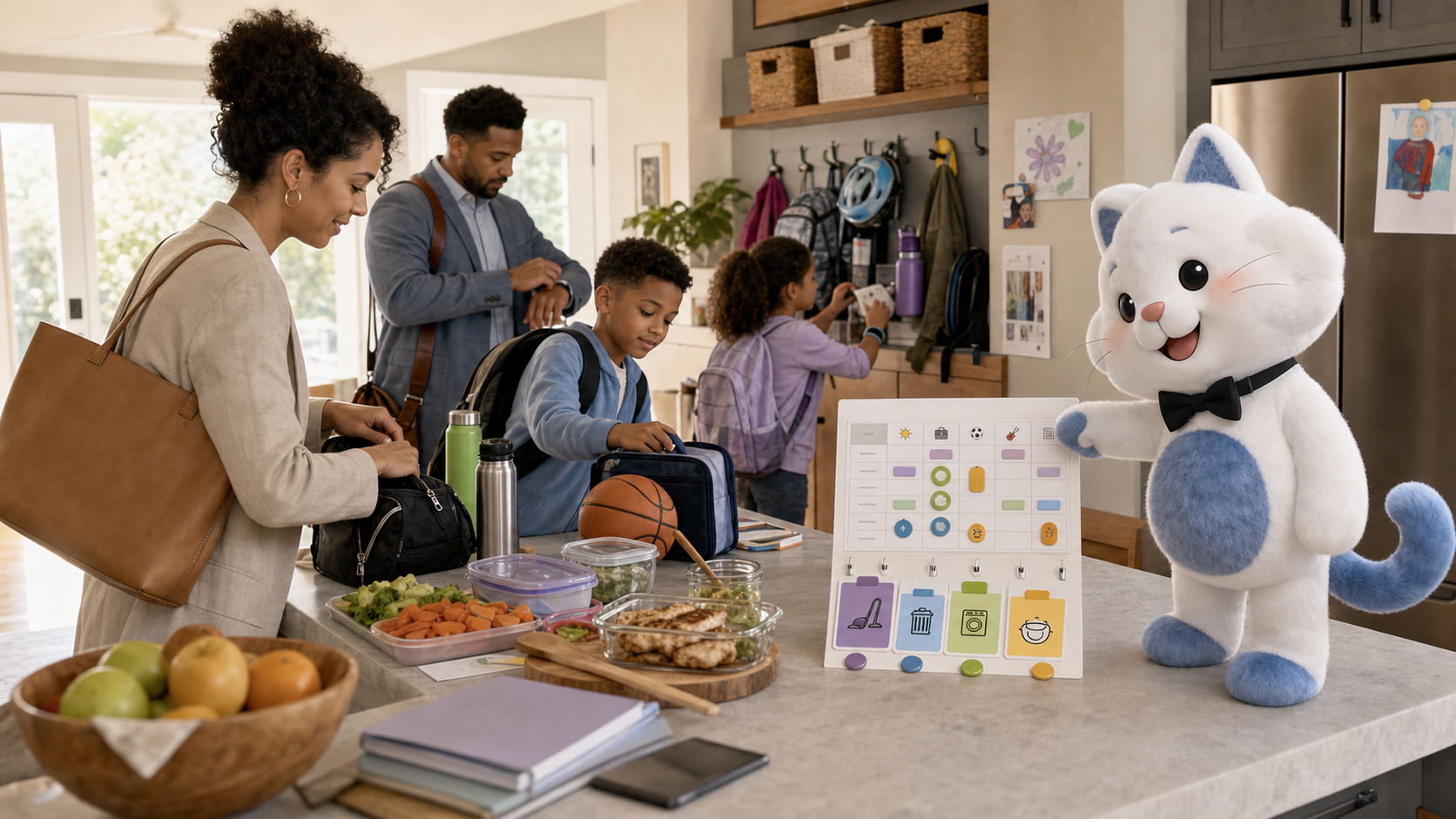
How Working Parents Organize Schedules, Chores and Meals
A realistic weekly system for shared schedules, task ownership, meal planning and grocery lists—without making one parent the household dispatcher.
The hardest part of running a busy household is often not doing the work. It is noticing what needs to happen, deciding who owns it, fitting it around the schedule and remembering to follow up. A useful family system makes those decisions visible before the week becomes a sequence of emergency texts.
What parents actually ask for
Community questions rarely sound like a software requirements document. Parents ask:
The repeated need is a household system: a shared source of truth that covers both where people are going and what must happen around those plans.
A five-part weekly system
1. Start with the real calendar
Bring work, school, sports and family commitments into one weekly view. Do not plan an ideal week first. Plan around the commitments that already exist.
2. Turn events into preparation work
A school performance may create three tasks: return the form, prepare the outfit and leave work early. Put those tasks next to the event and assign an owner. “We need to do this” is not ownership.
3. Plan only the meals the week can support
A late practice night needs a different meal from an open Sunday. Meal planning works better when it reads the schedule instead of living in a separate document.
4. Let the meal plan build the shopping list
Move missing ingredients into one shared list, then add household staples. This avoids keeping a recipe list, a pantry note and a grocery app in sync manually.
5. Hold a short ownership check
Spend five minutes confirming who owns the important tasks. The goal is not another planning meeting; it is to prevent invisible assumptions from becoming last-minute conflict.
The difference between helping and owning
| Helping | Owning |
|---|---|
| “Tell me what to buy.” | Maintaining the shared grocery list and completing the order. |
| “Remind me about the form.” | Tracking the deadline, completing the form and confirming submission. |
| “What should I cook?” | Choosing the assigned meal, checking ingredients and preparing it. |
A shared tool cannot create fairness by itself. It can, however, expose whether responsibility has actually moved or whether one parent is still the dispatcher.
What belongs in the system—and what does not
Put dates, assigned work, meals and shopping decisions into the shared workflow. Keep sensitive personal information private unless it genuinely needs to be shared. When a school newsletter or family file matters later, save it in a searchable source with a link back to the original rather than copying every paragraph into the calendar.
How Kinmory supports this workflow
Kinmory combines the shared calendar, assigned tasks, meal plans and grocery lists in one family system. Supported school emails, newsletters, screenshots and paper notices can become suggestions for events or tasks. Selected information can also remain available through Family Memory when the family needs to find it later.
The system still leaves important decisions with the user: review suggested events, choose which task to create, decide who owns it and confirm what is shared. It does not promise to automatically decide every chore or make every household choice.
For a product-by-product comparison, read our tested guide to the best family calendar apps.
A simple way to start tonight
- Put the next seven days of commitments in one calendar.
- Choose the three events that require preparation.
- Create one owned task for each.
- Plan three dinners around the actual schedule.
- Move the missing ingredients into one shared grocery list.
If that reduces follow-up messages and forgotten work, add the next workflow. Do not migrate your entire family life before the system proves it can remove one recurring burden.
Frequently asked questions
How can working parents keep family schedules and tasks in one place?
Start with one shared weekly calendar, then attach owned preparation tasks to the events that create them. Add meals and the shared grocery list only after the calendar-and-task handoff works.
How do couples divide the household mental load?
Assign ownership rather than asking one partner to delegate. Ownership includes noticing the work, tracking its deadline, completing it and confirming the outcome—not merely helping after a reminder.
Should meal planning happen separately from the family calendar?
Not entirely. The family schedule determines which nights can support cooking, leftovers or a quick meal. Connecting meals to the actual week reduces unrealistic plans and makes the grocery list more actionable.
What is the simplest way to start a family organization system?
Plan seven days, identify three events that require preparation, assign one task for each, choose three realistic dinners and put the missing ingredients in one shared list.
Related reading
- How Children Build Self-Direction in Grades 2–4
An evidence-informed framework for helping children start tasks, regulate effort, and become less dependent on adult prompting.
- How to Motivate Kids to Do Chores with Virtual Pet Rewards
Use immediate virtual pet feedback and longer-term family rewards to make chores easier to start—without turning every responsibility into a prize.
- How to Find School Newsletter Information Later
Find details from an old school newsletter without remembering its subject line. See how Kinmory saves searchable information and links to the source.
- The Mental Load Is Real — and Researchers Just Mapped It
Research on 3,000 US parents shows moms carry 71% of the household mental load. Learn what cognitive labor is, its two hidden types, and how to share it fairly.
Bring your family's plans into one place.
Use Kinmory on the web or phone to share calendars, tasks, meals and the information your household needs next.

Scan to Download
Point your camera here
kinmory.ai/download/kinmory