

Why Busy Families Need an AI Assistant, Not Another Calendar
Kinmory.AI is an AI assistant for families that helps households understand scattered information, remember context, and take the next step.
Kinmory.AI Perspective · AI Assistant for Families
Why Busy Families Need an AI Assistant, Not Another Calendar
Calendars store dates. Family life also depends on understanding the message, remembering the context, and knowing what needs to happen next.
On Tuesday evening, a parent opens an email from school while making dinner. The field trip is next Friday. The permission form is due this Thursday. Payment happens through a separate link. Children need a packed lunch and a rain jacket. Pickup is thirty minutes later than usual.
The message has been received. It has even been read. But it has not yet become a usable family plan.
Someone still has to identify the date, notice the earlier deadline, open the attachment, decide who will pay, remember what to pack, change the pickup plan, and make sure another adult knows. The calendar is only one destination in that chain.
A calendar is where organized information ends up. It does not do the work required to get the information there.
Families do not have a calendar shortage
Many households already have several calendars: a personal calendar, a work calendar, a shared family calendar, a school portal, a sports schedule, and perhaps a paper month view on the wall. Adding one more place to enter dates does not remove the work of reading, interpreting, remembering, and following through.
That work happens across media. A school notice may begin in email, point to a PDF, become a calendar event, create a payment task, and end with a conversation about who will handle pickup. A medical appointment may live on a calendar while its preparation instructions remain in a portal and its confirmation number sits in a text message. Dinner planning may start with what is in the refrigerator, pass through a recipe, and finish as a shopping list.
Our evidence map of household information fragmentation found that research repeatedly describes this kind of movement across people, tools, paper, and places. Our subsequent methods audit also found that the literature is better at describing household arrangements than reconstructing every handoff over time. The practical point is simple: household coordination is not a single screen. It is a chain of information work.
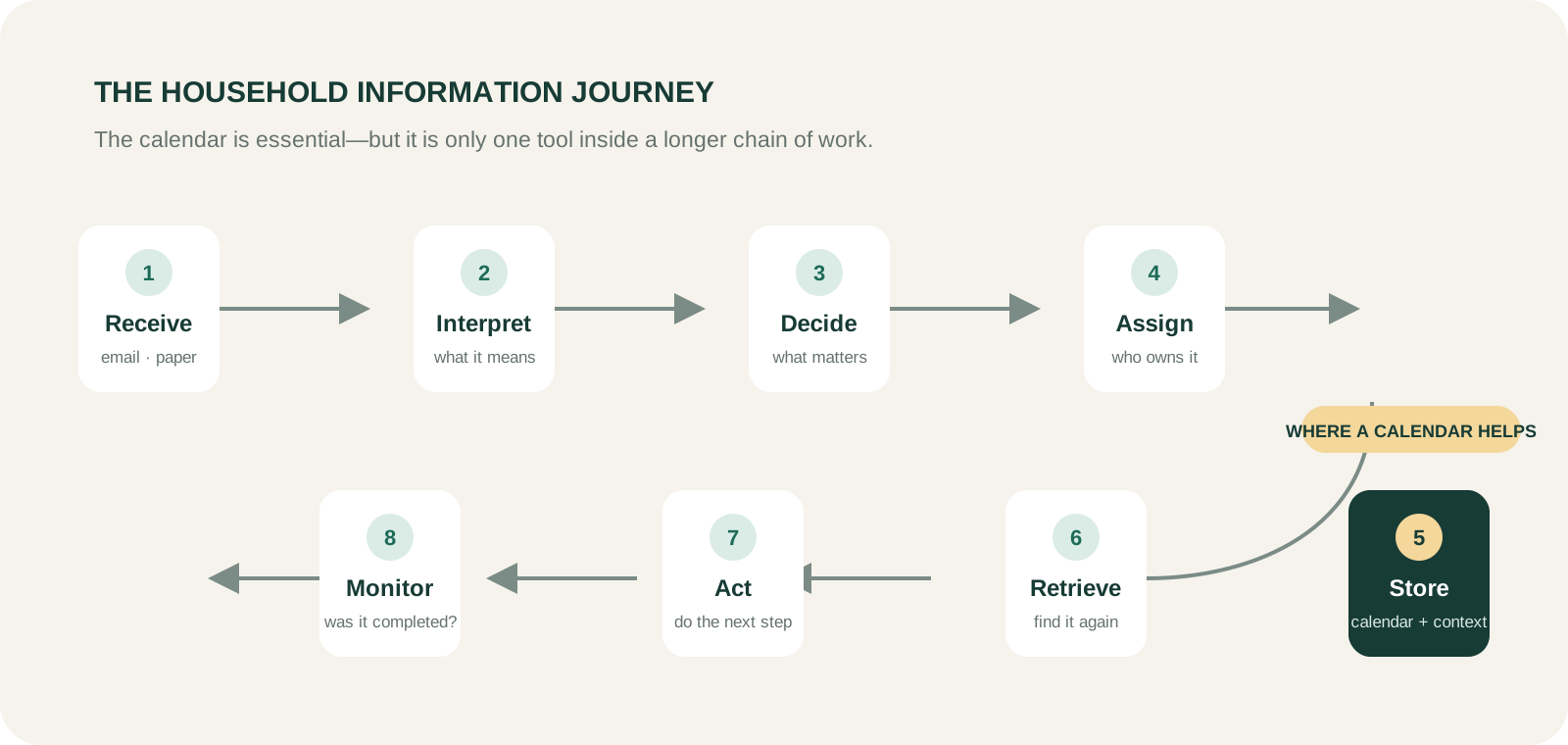
The missing layer is between information and action
A conventional calendar is very good at three things: storing a date, displaying time, and sending a reminder that was already configured. Those are valuable jobs. They are not the whole job.
Before an event reaches the calendar, someone usually has to answer several questions:
- Is this information relevant to our household?
- Which date is the event, and which date is the deadline?
- Does it create a task, a payment, a packing list, or a decision?
- Who needs to know, and who is responsible?
- What source will we need to find again later?
After the calendar entry is created, more work remains. The form still needs to be submitted. The rain jacket still needs to be found. The source may need to be checked when two dates disagree. Someone still has to know whether the task was actually completed.
This is the gap an AI family assistant should address—and it is the reason Kinmory.AI exists.
The word shared matters. A private chatbot can answer a question for one person. A family assistant needs to support the people, responsibilities, and information that must move between household members.
Memory matters too. An answer is not very useful if the family cannot find it again, see where it came from, or connect it to the next step. And human control is essential: an assistant can identify and suggest, but the household should review consequential information and decide what happens.
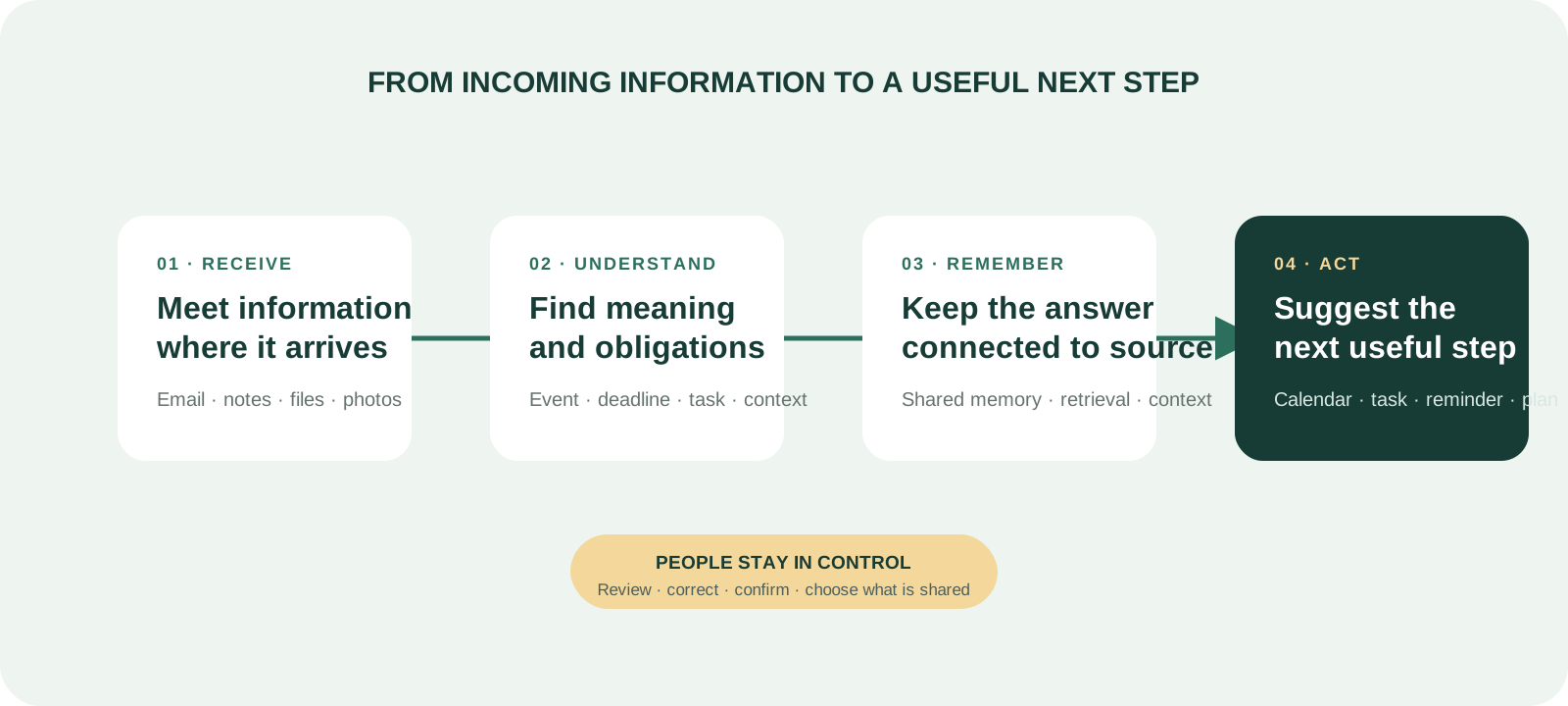
What this looks like in ordinary family life
Kinmory.AI is built around this wider loop—not around a calendar with an AI button added to it. Three everyday situations make the difference concrete.
School information
A school email is rarely just an event
A single message may contain an activity date, a registration deadline, a form, a payment, a packing instruction, and a pickup change. Treating it as one block of text leaves the parent to separate those obligations manually.
With Kinmory.AI's Email AI Listening, supported email content can be analyzed for suggested calendar events, tasks, and reminders. A parent reviews the result before relying on it. The aim is not to make email disappear; it is to reduce the chance that “I read it” is mistaken for “our family has a plan.”
A school email may be a date, a form, a payment, a packing list, and a responsibility handoff—all at once.
Family Memory
A household needs to remember more than time
Not every important fact belongs on a calendar. Families also need to remember where a document is stored, which filter fits an appliance, what a care instruction says, which professional they trusted, or why a decision was made.
Kinmory.AI's Family Memory works with information a user deliberately chooses, including supported notes and files. It is designed to help retrieve an answer and return to the available source when verification matters. That is different from trying to replace the original document store—and different from expecting one person to remain the household's human search engine.
A calendar answers when. A family memory also needs to answer what, where, why, and according to which source.
Meals and everyday decisions
An AI answer should lead somewhere useful
Consider dinner. A person can photograph available ingredients and ask what they can make. Kinmory.AI can suggest a recipe; the user can edit or save it and, when appropriate, add it to a meal plan. The value is not simply that AI produced text. The suggestion can continue into an existing household workflow.
That distinction applies far beyond food. A useful family assistant should help information arrive at the right next step—a calendar item, task, reminder, meal, or list—without pretending that every suggestion is automatically correct.
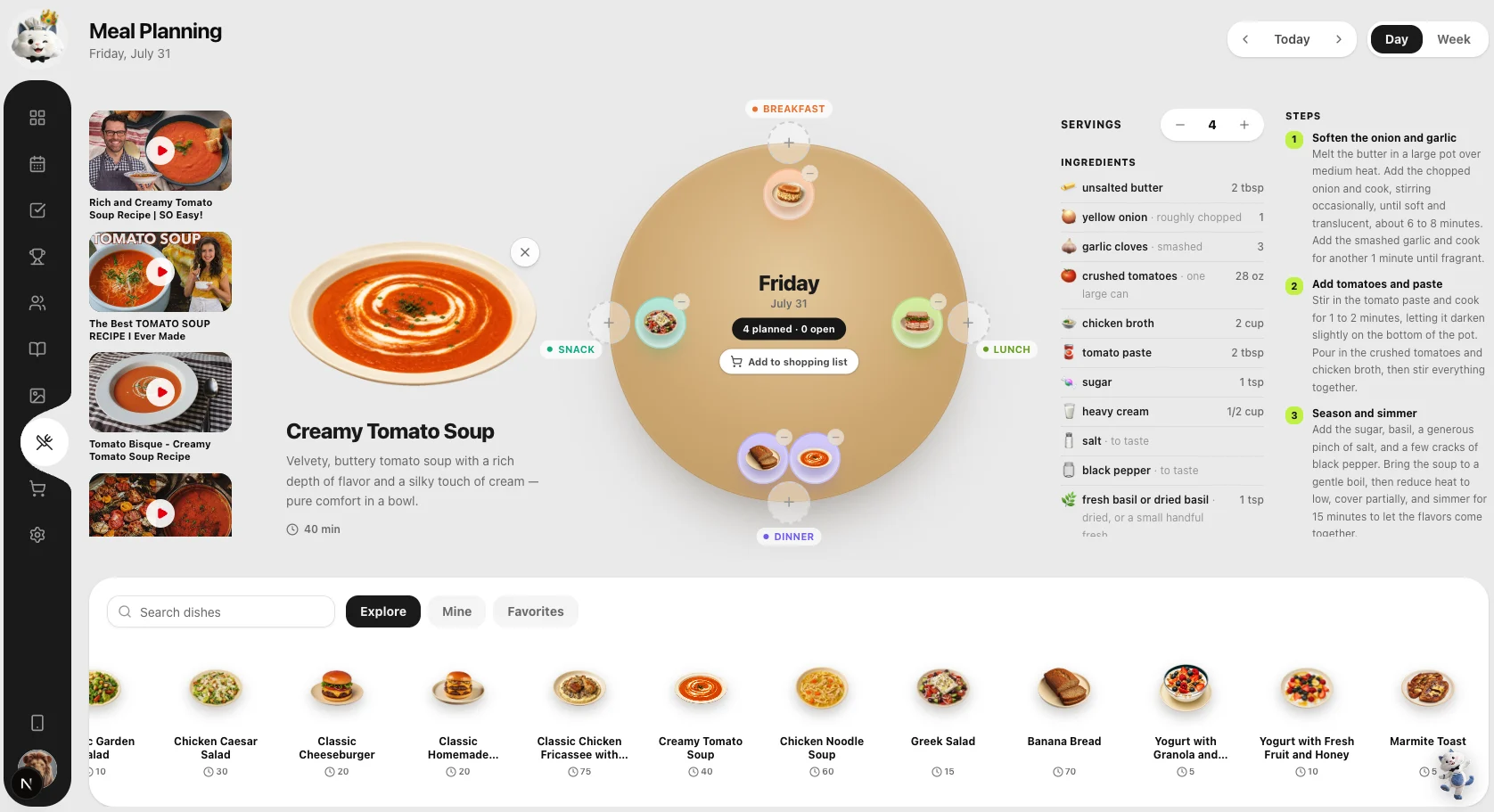
The useful unit is not the AI answer. It is the next step the household can actually use.
An assistant should connect the work, not hide it
“AI assistant” can easily become a vague label for a chatbot or a single automation feature. A family assistant should meet a more practical standard.
It works with real inputs
Family information arrives through email, files, notes, photos, calendars, and ordinary requests—not as perfectly formatted data.
It builds shared memory
The goal is not to make one organizer faster while everyone else still depends on that person's inbox and memory.
It reaches a workflow
Understanding should connect to an appropriate calendar, task, reminder, meal, or list when the user chooses.
It keeps people in control
Suggestions should be reviewable, uncertainty should remain visible, and people should choose what is connected or shared.
AI should reduce cognitive work without taking away control
A family assistant is not an autonomous household manager. It should not decide that an extracted date is certainly correct, expose a personal source to the whole family, or make health and financial judgments on someone's behalf.
| AI can help | People still decide |
|---|---|
| Identify possible dates, tasks, and reminders | Whether the information is correct and should be saved |
| Summarize requirements in a notice | Who is responsible and what matters in context |
| Retrieve information from selected sources | Whether the source is current and authoritative |
| Suggest a recipe or household plan | Whether it fits allergies, health needs, preferences, and reality |
| Connect information to a possible next step | Whether and when that action should happen |
This is also why source visibility and privacy controls are part of the product story. Kinmory.AI's supported email analysis uses user-authorized connections or deliberate forwarding. Extracted results can become useful family information, while users should still review AI-generated suggestions against the original material.
In Family Memory, sources can be private or family-shared. Content outside the selected scope is not included, and private sources are not available to other family members. Availability may vary by platform and plan.
For credentials, a dedicated password manager remains the better tool. For medical, legal, or financial decisions, the original records and qualified professionals remain authoritative. An AI family assistant should connect everyday household work without claiming every category of information as its own.
“Family” describes responsibility, not one household shape
Busy parents are the clearest example because school, care, meals, transport, and work collide every day. But the underlying problem is broader. A person coordinating appointments for an older parent, a couple dividing household administration, a co-parent working across two homes, or an individual balancing work and personal obligations faces the same gap between incoming information and reliable follow-through.
Here, “family” means the people and responsibilities someone is helping to hold together. The assistant becomes valuable when that information no longer has to depend on one person's inbox, one person's memory, or one person's availability.
Kinmory.AI is an AI assistant for families
Return to the school email at the beginning. A calendar can display the field trip once someone has entered it. A useful AI family assistant should help the household notice the earlier deadline, preserve the instructions, identify the task, remember the source, and make the result available to the people involved.
That does not eliminate family work. It makes more of the work visible, shareable, and easier to continue.
A family calendar can show where everyone needs to be. An AI family assistant should also help the household remember why, what needs to happen before then, and what comes next.
Kinmory.AI is already an AI assistant for families—not a future product direction. The calendar is one part of it, not the category itself. The larger job is helping a household understand, remember, and act on everyday information together.
Frequently asked questions
What is Kinmory.AI?
Kinmory.AI is an AI assistant for families. It helps busy households organize shared schedules and tasks, understand supported incoming information, retrieve selected family knowledge, and connect that information to useful next steps.
What is an AI family assistant?
An AI family assistant is a shared system that helps a household receive, understand, organize, remember, and act on everyday information while keeping people in control of important decisions.
How is an AI family assistant different from a shared calendar?
A shared calendar primarily stores and displays scheduled events. An AI family assistant can also help interpret incoming information, preserve its context, retrieve non-calendar facts, and connect information to tasks, reminders, meals, or lists.
Can Kinmory.AI identify calendar events in email?
With Email AI Listening, supported email content can be analyzed for suggested calendar events, tasks, and reminders. AI can make mistakes, so users should review important details against the original message.
What can Family Memory remember?
Family Memory is designed to retrieve information from supported notes and files that a user deliberately selects. It can help return an answer with source context rather than replacing the original file or service.
Does Kinmory.AI make decisions automatically?
Kinmory.AI can identify, organize, retrieve, and suggest. Consequential information and actions should remain reviewable, and users decide what to save, share, or act on.
Is Kinmory.AI only for parents?
No. The product is designed around family coordination, but the same information-to-action problem affects caregivers, couples, co-parents, and busy individuals managing responsibilities across work and home.
Related reading
- Muse for Families? Meet Kinmory.AI
Muse is a personal AI agent. Kinmory.AI is the family-facing counterpart: an AI assistant built around shared information, memory, and follow-through.
- AI Family Assistant for Calendar, Tasks, Meals & Family Info
Kinmory connects family calendars, tasks, meals, shopping, and selected notes and files—so your family can ask, find answers, and take the next step.
- How Household Information Work Is Measured
A methods audit of how researchers observe household information work: units of analysis, data sources, visible processes, and recurring blind spots.
- The Missing Map of Household Information
A structured evidence map of how families receive, interpret, allocate, store, transfer, retrieve, act on, and monitor everyday information.
Bring your family's plans into one place.
Use Kinmory on the web or phone to share calendars, tasks, meals and the information your household needs next.

Scan to Download
Point your camera here
kinmory.ai/download/kinmory